
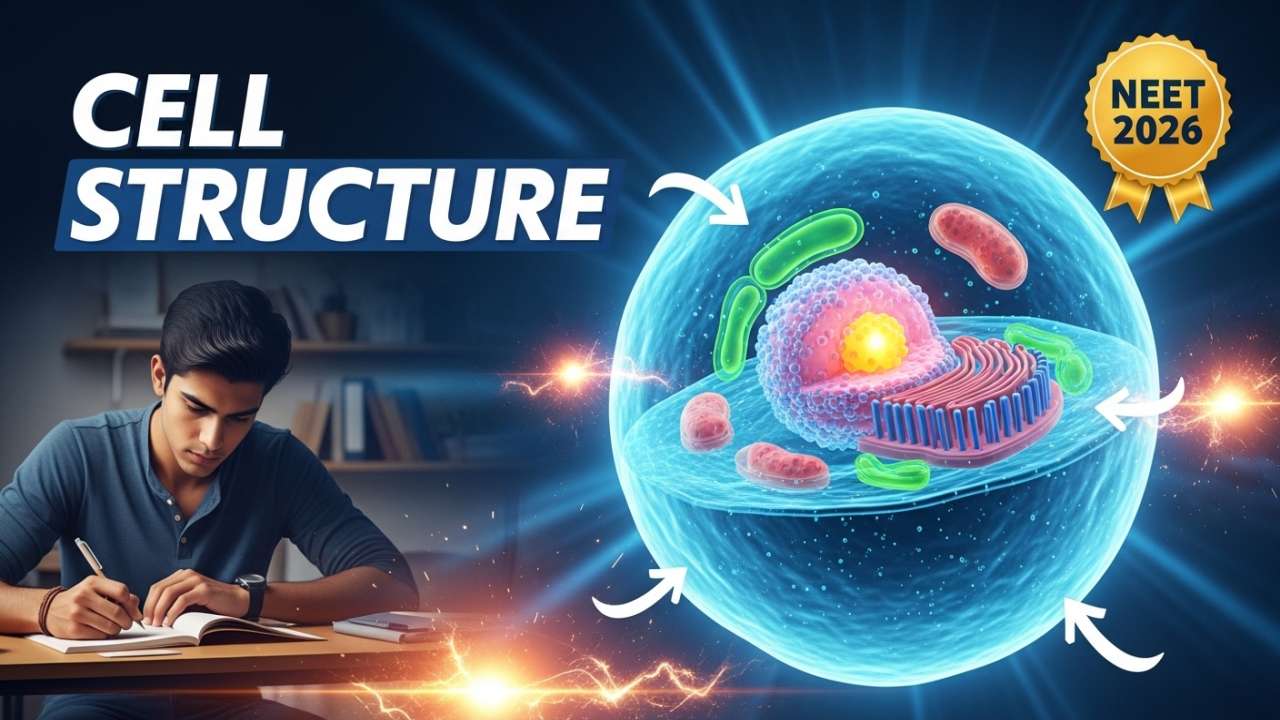
When you think about human anatomy, you might imagine hearts pumping blood, lungs breathing air, and brains thinking thoughts. But what if we told you that all of this happens at the cellular level? The answer lies in understanding Cell Structure – the fundamental building block of all living organisms. If you’re preparing for NEET 2026, this chapter is absolutely crucial because it forms the foundation of your entire Biology preparation.
Cell Structure is not just another topic in your NEET syllabus. It’s the gateway to understanding almost every biological process that happens inside your body. Whether it’s photosynthesis in plants, respiration in animals, or protein synthesis in any cell, everything occurs within the cellular compartments. Without a clear understanding of Cell Structure, you’ll find yourself struggling with Advanced Biology topics later on.
The good news is that you don’t need expensive coaching or fancy resources to master this topic. Free mock tests are available on platforms like neetmock.in, and you can access them without any login hassle. This guide will help you navigate through Cell Structure systematically and crack your NEET examination.
Why Cell Structure Matters in NEET 2026
Importance of the Examination
Cell Structure is one of the most heavily tested topics in the NEET Biology examination. According to the exam pattern, you can expect approximately 15-20 direct questions from this chapter alone. But beyond the direct questions, knowledge of cell structure becomes essential for understanding related chapters like:
- Metabolism and Enzyme Action
- Photosynthesis and Cellular Respiration
- Reproduction and Cell Division
- Molecular Biology and Gene Expression
Also Read:- Biological Classification Test 18 (Class 11) – 10 MCQs Quiz with Answers | Boost Score Fast
Connection with Other Topics
Understanding cell structure creates a ripple effect across your entire Biology preparation. When you understand how organelles work, you automatically understand how life processes happen. For instance, knowing about mitochondria helps you understand respiration better. Knowing about chloroplasts makes photosynthesis crystal clear.
The NEET examination committee knows this very well. That’s why they ask questions that require you to connect cell structure with various life processes. A typical question might ask: “Which organelle would be more abundant in a pancreatic cell secreting digestive enzymes?” To answer this, you need to know that the Golgi apparatus is abundant in secretory cells.
Scoring Potential
Here’s what most students don’t realise: Cell structure questions in NEET are relatively straightforward if you understand the concepts properly. They’re not trick questions. They’re direct application questions. If you know your stuff, you can easily score 90-100% of the marks from this chapter.
Main Topics Covered in the Cell Structure Chapter
| Topic | Subtopics | Difficulty Level | Questions Expected |
|---|---|---|---|
| Prokaryotic Cells | Cell wall, Flagella, Pili, Nucleoid, Ribosomes | Easy to Moderate | 2-3 |
| Eukaryotic Cells | Nucleus, Mitochondria, ER, Golgi, Lysosomes | Moderate | 5-7 |
| Cell Membrane | Lipid Bilayer, Proteins, Carbohydrates, Fluid Mosaic Model | Moderate to Difficult | 3-4 |
| Transport Mechanisms | Diffusion, Osmosis, Active Transport, Endocytosis | Difficult | 4-5 |
| Nucleus and Nucleolus | Chromatin, Histones, DNA Organization | Moderate | 2-3 |
| Plant Cell Specifics | Cell Wall, Chloroplasts, Vacuoles | Easy to Moderate | 2-3 |
| Mitochondria and Chloroplasts | Structure, Function, Semi-autonomous nature | Moderate to Difficult | 3-4 |
Part 1: Understanding Prokaryotic Cells
What are prokaryotic cells?
Prokaryotic cells represent the earliest form of cellular life on Earth. These are cells that lack a membrane-bound nucleus and other membrane-bound organelles. They are found in bacteria and archaea. The word “prokaryotic” literally means “before nucleus”.
Key Characteristics of Prokaryotic Cells
Prokaryotic cells are relatively simple compared to eukaryotic cells, but they are incredibly efficient. Here are the main features you need to memorise:
Structural Components:
- Cell Wall – Made of peptidoglycan in bacteria. This is much more rigid than the plant cell wall made of cellulose.
- Cell Membrane (Plasma Membrane) – A phospholipid bilayer that controls what enters and exits the cell.
- Cytoplasm – The jelly-like substance where all metabolic activities happen.
- Nucleoid Region – This is NOT a true nucleus. It’s an irregular area containing the bacterial chromosome (usually one circular DNA molecule).
- Ribosomes – These are 70S ribosomes (smaller than eukaryotic ribosomes, which are 80S).
- Flagella – Tail-like structures that help bacteria move around.
- Pili – Hair-like projections used for attachment and sometimes genetic exchange.
Prokaryotic vs Eukaryotic: A Quick Comparison
| Feature | Prokaryotic | Eukaryotic |
|---|---|---|
| Nucleus | Absent (Nucleoid region) | Present (true nucleus) |
| Membrane-bound Organelles | Absent | Present |
| Cell Wall | Present (Peptidoglycan) | Absent in animals, Cellulose in plants |
| Ribosome Size | 70S | 80S |
| Chromosome | Single, circular | Multiple, linear |
| Size | 1-10 μm | 10-100 μm |
| Examples | Bacteria, Archaea | Animals, Plants, Fungi |
NEET Mock Test Focus Points for Prokaryotic Cells
When you take mock tests on platforms like neetmock.in, you should focus on these question types:
- Questions asking to identify which feature is absent in prokaryotes
- Comparison-based questions between bacteria and eukaryotes
- Structure and function of flagella and pili
- Understanding the nucleoid region
- Size comparison of ribosomes
- Differences in cell wall composition
Part 2: Understanding Eukaryotic Cells – Animal Cells
What Makes a Cell Eukaryotic?
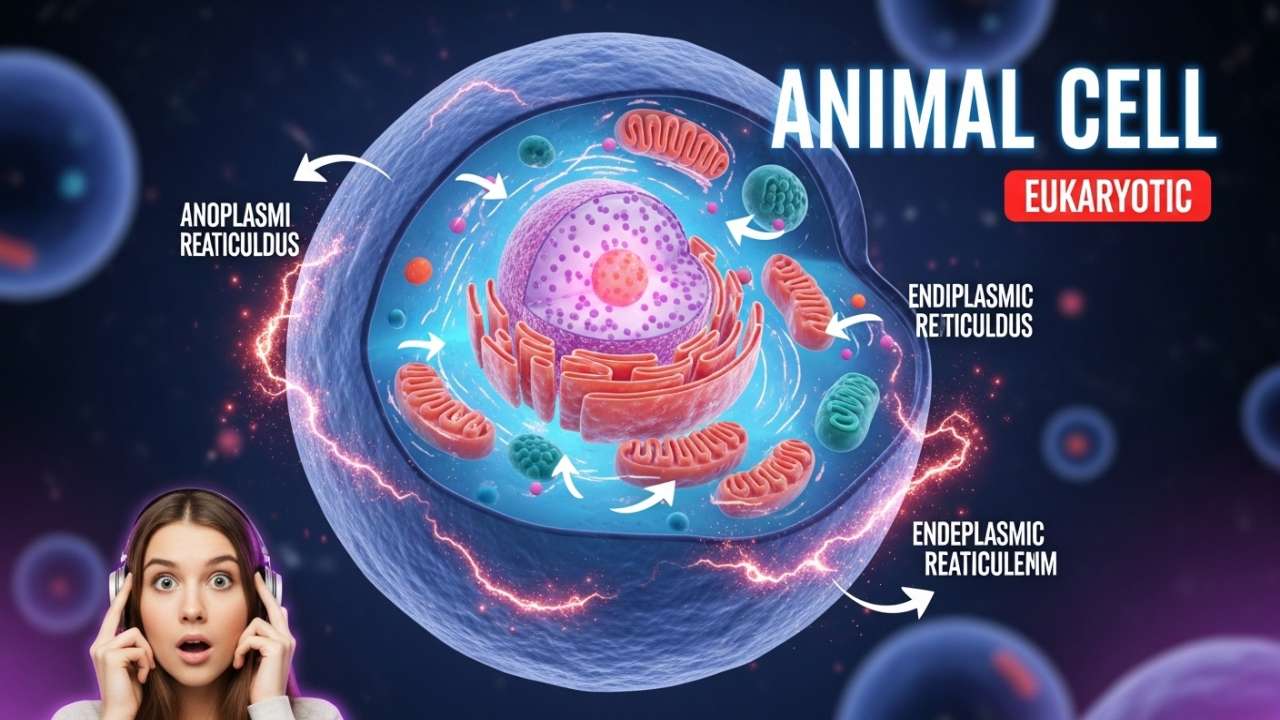
Eukaryotic cells are much more complex than prokaryotic cells. The defining feature is the presence of a membrane-bound nucleus that contains the cell’s DNA. But that’s just the beginning. Eukaryotic cells also have numerous other membrane-bound organelles, each with specific functions.
The Nucleus: Control Center of the Cell
The nucleus is arguably the most important organelle in a eukaryotic cell. It contains the genetic material (DNA) and controls all the metabolic activities of the cell.
Components of the Nucleus:
- Nuclear Membrane (Nuclear Envelope) – A double membrane that separates the nucleus from the cytoplasm. It has pores called nuclear pores that allow selective passage of substances.
- Nucleoplasm – The jelly-like substance inside the nucleus, similar to cytoplasm in the cell.
- Chromatin – A complex of DNA and proteins (histones). When the cell divides, chromatin condenses to form chromosomes.
- Nucleolus – A spherical structure within the nucleus where ribosomal RNA (rRNA) is synthesized. This is where ribosomes are assembled.
Mitochondria: The Powerhouse of the Cell
Mitochondria are often called the “powerhouse of the cell” because they generate ATP (Adenosine Triphosphate), which is the energy currency of the cell.
Structure of Mitochondria:
- Outer Membrane – Smooth and permeable
- Inner Membrane – Folded to form cristae, contains enzymes for ATP synthesis
- Matrix – The inner compartment containing enzymes and mitochondrial DNA
- Cristae – Folds of the inner membrane that increase surface area for ATP production
Important Points:
- Mitochondria have their own DNA (circular, like bacteria)
- Mitochondria have their own ribosomes (70S, like bacteria)
- This led to the Endosymbiotic Theory – mitochondria were once independent organisms
- Cells with high energy demands have more mitochondria (e.g., muscle cells, sperm cells)
Endoplasmic Reticulum: The Protein Factory
The Endoplasmic Reticulum (ER) is an extensive network of membrane-bound tubules and sacs. There are two types:
1. Rough Endoplasmic Reticulum (Rough ER or RER):
- Covered with ribosomes on its outer surface
- Function: Synthesis of proteins intended for secretion or membrane insertion
- Found abundantly in cells that produce and secrete proteins (e.g., pancreatic cells, liver cells)
- The ribosomes attached to RER are called “bound ribosomes”
2. Smooth Endoplasmic Reticulum (Smooth ER or SER):
- No ribosomes attached
- Function: Synthesis of lipids, carbohydrates, and detoxification
- Found abundantly in cells involved in lipid metabolism and hormone synthesis
- Also involved in storage of calcium ions in muscle cells
Golgi Apparatus: The Packaging Center
The Golgi apparatus is a stack of flattened membrane-bound sacs called cisternae. Its primary function is to modify, package, and ship proteins and lipids.
Functions:
- Modifies proteins received from ER (adds glycosyl groups, forms glycoproteins)
- Packages proteins into vesicles
- Directs vesicles to their destination (secretion, membrane incorporation, lysosome formation)
- In plant cells, synthesizes polysaccharides for the cell wall
Organization:
- Cis face (Forming face) – Receives vesicles from ER
- Trans face (Maturing face) – Releases vesicles for transport
Also Read:- Biological Classification Test 17 (Class 11) – 10 MCQs Quiz with Answers | Score Booster
Lysosomes: Cellular Garbage Disposals
Lysosomes are membrane-bound sacs containing digestive enzymes (hydrolases) that break down various substances. They’re found mainly in animal cells.
Functions:
- Intracellular digestion of materials brought in by endocytosis
- Destruction of worn-out organelles (autophagy)
- Cell death and tissue remodeling
- Defense against pathogens
Important: If lysosomal enzymes are released into the cytoplasm, they can cause cell death. This is why lysosomes are called “suicide bags.”
Ribosomes: The Protein Synthesizers
Ribosomes are sites of protein synthesis. They read mRNA and synthesize proteins according to the genetic code.
Key Points:
- Eukaryotic ribosomes are 80S (made of 60S and 40S subunits)
- Can be free in cytoplasm or attached to RER
- Made of rRNA and ribosomal proteins
- Also found in mitochondria and chloroplasts (70S)
Centrioles and Centrosome
Centrioles are cylindrical structures found in most animal cells (usually a pair arranged perpendicular to each other).
Functions:
- Organization of microtubules
- Formation of the spindle during cell division
- Formation of cilia and flagella in animal cells
Note: Centrioles are absent in most plant cells.
Part 3: Understanding Plant Cells and Their Unique Features
The Plant Cell Wall
Plant cells have a cell wall in addition to the cell membrane. This is a rigid structure made primarily of cellulose.
Functions of Cell Wall:
- Provides structural support to the plant
- Prevents excessive water loss
- Provides mechanical support
- Maintains cell shape
- Acts as a barrier to pathogens
Composition:
- Cellulose – The main component (microfibrils arranged in layers)
- Hemicellulose – Provides flexibility
- Pectin – Acts as a cement holding cells together
- Middle Lamella – A pectin-rich layer between adjacent cells
Chloroplasts: The Photosynthetic Powerhouses
Chloroplasts are the sites of photosynthesis in plant cells. Like mitochondria, they have their own DNA and ribosomes, supporting the endosymbiotic theory.
Structure of Chloroplasts:
- Outer Membrane – Smooth and permeable
- Inner Membrane – Contains transport proteins
- Stroma – The fluid inside containing enzymes and chloroplast DNA
- Thylakoids – Flattened sac-like structures stacked in columns called grana
- Grana – Stacks of thylakoids where light reactions occur
- Granum Lamellae – Single thylakoid discs within grana
Functions:
- Light reactions occur in thylakoid membranes (produces ATP and NADPH)
- Dark reactions (Calvin cycle) occur in stroma (produces glucose)
Important: The green color of chloroplasts comes from chlorophyll pigment present in thylakoids.
Large Central Vacuole
Plant cells have a large central vacuole that can occupy up to 90% of the cell’s volume.
Functions:
- Maintains turgor pressure – Keeps the plant rigid and upright
- Storage – Stores water, sugars, organic acids, minerals
- Pigment storage – In some cells, stores pigments (red, blue, purple)
- Waste storage – Accumulates waste products
- Growth – Contributes to cell growth without adding mass
Important: When a plant cell loses water (plasmolysis), the vacuole shrinks, and the cell becomes flaccid. This is why plants wilt when not watered.
Part 4: Cell Membrane – The Selective Barrier
Fluid Mosaic Model
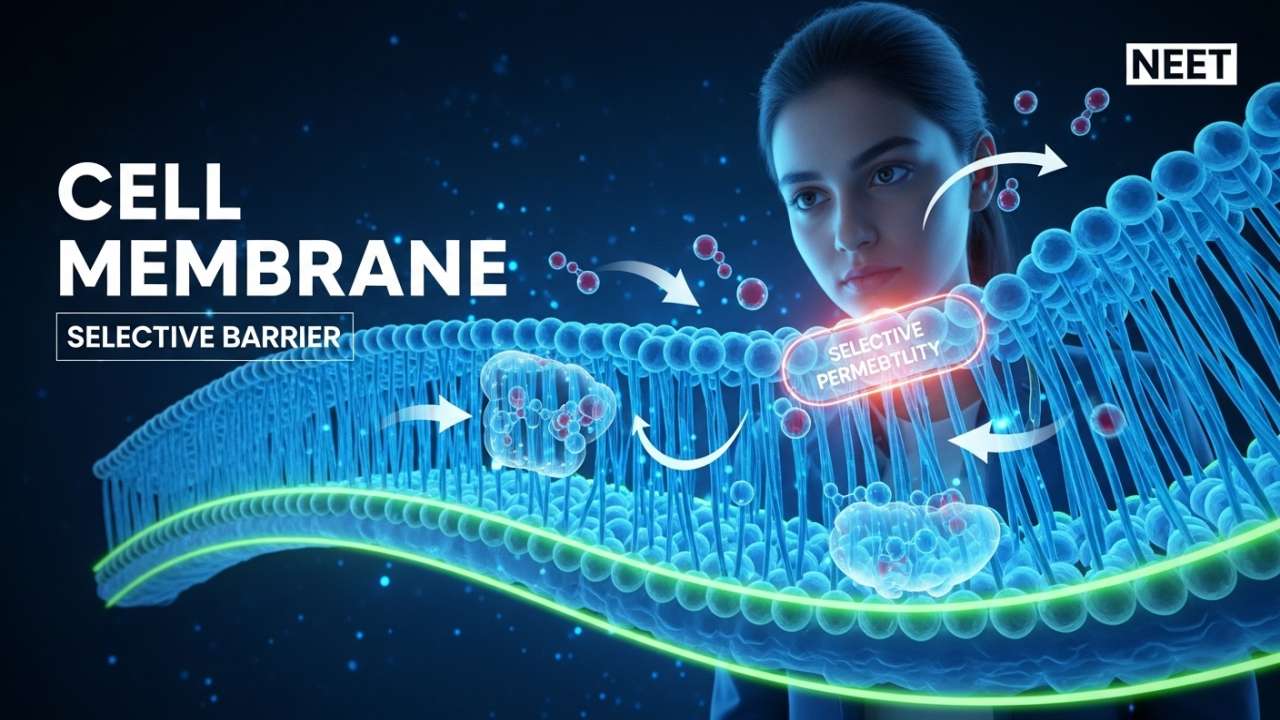
The cell membrane is not a static structure. It’s a dynamic, flexible barrier composed of lipids and proteins in constant motion. This is described by the Fluid Mosaic Model proposed by Singer and Nicolson.
Key Points of the Model:
- Membrane is fluid – Lipids and proteins can move laterally
- Mosaic nature – Various components fit together like a mosaic
- Asymmetric – The two sides of the membrane are different
- Dynamic – Constantly changing and reorganizing
Structure of Cell Membrane
1. Lipid Bilayer:
The basic structure is a bilayer of phospholipids. Each phospholipid has:
- Hydrophilic head – Polar, attracted to water, faces outward
- Hydrophobic tails – Non-polar, repelled by water, face inward
Other lipids in the membrane include cholesterol (in animal cells) and glycolipids.
2. Membrane Proteins:
Proteins embedded in or attached to the membrane serve various functions:
| Protein Type | Location | Function |
|---|---|---|
| Integral Proteins | Span the entire membrane | Transport, receptor activity |
| Peripheral Proteins | Attached to inner surface | Structural support, enzyme activity |
| Glycoproteins | Surface of membrane | Cell recognition, immune response |
| Channels | Span membrane | Selective transport |
| Carriers | Span membrane | Active transport |
| Receptors | Surface | Signal reception |
3. Carbohydrates:
Carbohydrates are attached to proteins (glycoproteins) or lipids (glycolipids) on the outer surface of the membrane.
Functions:
- Cell recognition
- Immune response
- Blood group determination
- Cell-cell communication
Transport Across Cell Membrane
The cell membrane is selectively permeable – it allows some substances to pass while blocking others.
1. Passive Transport (No Energy Required)
Simple Diffusion:
- Movement of molecules from high concentration to low concentration
- No energy required
- Examples: Oxygen, carbon dioxide, lipid-soluble substances
- Process: Molecules randomly move; net movement is from high to low concentration
Osmosis:
- Diffusion of water across a semipermeable membrane
- Movement of water from area of higher water potential to lower water potential
- Critical concept: Water moves toward the area with more dissolved solutes
- Related to plasmolysis and deplasmolysis in plant cells
Facilitated Diffusion:
- Passive transport with the help of channel or carrier proteins
- No energy required (ATP)
- Examples: Glucose uptake, ion movement
- Protein helps the molecule cross the membrane
2. Active Transport (Energy Required)
- Movement of molecules against the concentration gradient
- Requires ATP energy
- Uses carrier proteins
- Examples: Sodium-potassium pump (maintains cellular ion balance), uptake of minerals by roots
Sodium-Potassium Pump Details:
| Feature | Details |
|---|---|
| Location | Cell membrane of all cells |
| Function | Maintains Na+ and K+ gradient |
| Energy Source | 1 ATP per 3 Na+ out, 2 K+ in |
| Importance | Maintains resting membrane potential |
| Inhibitor | Cardiac glycosides (digoxin) |
3. Bulk Transport
Endocytosis:
- Cell membrane folds inward, engulfing material
- Types: Phagocytosis (solid), Pinocytosis (liquid), Receptor-mediated endocytosis
- Material enters in vesicles
- Examples: White blood cells engulfing bacteria, cell uptake of large molecules
Exocytosis:
- Vesicles fuse with cell membrane, releasing contents
- Opposite of endocytosis
- Examples: Neurotransmitter release, hormone secretion, digestive enzyme secretion
Part 5: Essential Organelles and Their Functions
Smooth Endoplasmic Reticulum Details
The smooth endoplasmic reticulum is crucial for various metabolic functions:
In Different Cell Types:
| Cell Type | SER Abundance | Function |
|---|---|---|
| Liver Cell | High | Detoxification of drugs and harmful substances |
| Muscle Cell | High (called sarcoplasmic reticulum) | Storage and release of calcium for contraction |
| Steroid-secreting cells | High | Synthesis of steroid hormones |
| Intestinal cells | Moderate | Synthesis of lipids |
Peroxisomes
Peroxisomes are small, membrane-bound organelles containing oxidative enzymes.
Functions:
- Fatty acid oxidation (breaking down long-chain fatty acids)
- Hydrogen peroxide (H₂O₂) metabolism
- Production of hydrogen peroxide
- Breakdown of hydrogen peroxide (catalase enzyme)
- Detoxification in liver and kidney cells
Important: Defects in peroxisomal enzymes can cause serious genetic diseases like Zellweger syndrome.
Cytoskeleton
The cytoskeleton is a network of protein filaments that provides structural support to the cell.
Components:
| Component | Composition | Function | Diameter |
|---|---|---|---|
| Microfilaments | Actin | Cell movement, muscle contraction, cytokinesis | 5-7 nm |
| Intermediate Filaments | Keratin, vimentin, lamin | Structural support, tensile strength | 8-10 nm |
| Microtubules | Tubulin (α and β) | Cell shape, intracellular transport, spindle formation | 20-25 nm |
Part 6: Using neetmock.in for Practice
Why neetmock.in?
neetmock.in is an excellent platform for practicing Cell Structure questions without any login requirement. Here’s why it stands out:
Advantages:
- No Registration Required – Start practicing immediately without creating an account
- Chapter-Wise Tests – Specifically designed mock tests for Cell Structure chapter
- Free Access – Completely free, no hidden charges or premium features
- Instant Results – Get results immediately after completing the test
- Detailed Solutions – Each question has explanations to help you learn
- NEET-Pattern Questions – Questions follow the exact pattern of NEET examination
- Time Management Features – Practice with actual time limits of NEET
- Performance Analytics – Track your progress and identify weak areas
- Mobile Friendly – Access from any device, any time
How to Use neetmock.in Effectively
Step 1: Start with Easy Tests
Begin with tests that have mixed difficulty levels. Don’t jump directly to difficult questions.
Step 2: Time Yourself
NEET Biology section has 45 questions to be solved in 45 minutes. Each question should ideally take 1 minute. Practice this timing on neetmock.in.
Step 3: Analyze Your Mistakes
After each test, thoroughly review:
- Questions you got wrong
- Questions you guessed
- Questions that took too much time
- Concepts that are still unclear
Step 4: Revise and Re-attempt
Wait 3-4 days after taking a test, revise the related concepts, then re-attempt the same test.
Step 5: Progressive Difficulty
Gradually increase the difficulty level as your confidence grows.
Recommended Test Schedule on neetmock.in
| Week | Activity | Number of Tests | Focus |
|---|---|---|---|
| Week 1 | Basic Understanding | 2-3 | Prokaryotic vs Eukaryotic cells |
| Week 2 | Concept Building | 3-4 | Cell Membrane and Nucleus |
| Week 3 | Detailed Learning | 3-4 | Organelles and their functions |
| Week 4 | Integration | 4-5 | All topics combined |
| Week 5 | Speed Building | 5-6 | Full-length mixed tests |
| Week 6 | Revision | 4-5 | Weak area focus |
| Week 7 | Full Practice | 6-7 | NEET-level difficulty |
| Week 8 | Final Revision | 3-4 | All combined |
Part 7: Chapter-Wise Breakdown and Study Strategy
Chapter 1: Cell – The Unit of Life
Topics to Cover:
- Definition and characteristics of living organisms
- Cell as the basic unit of life
- Discovery of cells (Robert Hooke, Leeuwenhoek)
- Cell theory
- Shape, size, and number of cells
- Prokaryotic vs Eukaryotic cells
NEET Focus:
Questions typically ask:
- “Which scientist first observed cells?”
- “Cell theory statements – which is true/false?”
- “Characteristics of prokaryotic cells”
- Diagram-based questions on cell structure
Chapter 2: Prokaryotic Cells
Detailed Points:
- Cell Wall – Composition, function, differences from plant cell wall
- Cell Membrane – Structure, function in prokaryotes
- Flagella – Structure (whip-like tail), function (movement)
- Pili – Types (sex pili for conjugation, attachment pili)
- Nucleoid – Not a true nucleus, contains genetic material
- Ribosomes – 70S size, function in protein synthesis
- Plasmids – Small DNA molecules, used in genetic engineering
- Mesosomes – Invaginations in cell membrane, site of respiration
Practice Questions:
- Why are prokaryotes smaller than eukaryotes?
- What is the function of flagella?
- How do prokaryotes differ from eukaryotes in terms of complexity?
- Which organelle is absent in prokaryotic cells?
Chapter 3: Eukaryotic Animal Cells
Key Organelles to Master:
- Nucleus – Structure, function, DNA organization
- Mitochondria – Structure, ATP production, maternal inheritance
- Endoplasmic Reticulum – Rough and Smooth, protein and lipid synthesis
- Golgi Apparatus – Modification, packaging, lysosome formation
- Lysosomes – Enzymes, functions, importance in immunity
- Ribosomes – 80S, role in protein synthesis
- Centrioles – Pair, organization of microtubules
- Cilia and Flagella – Movement structures, 9+2 arrangement
Common Exam Questions:
- “Which organelle is responsible for ATP production?” – Mitochondria
- “What is the function of the Golgi apparatus?” – Modification and packaging
- “Why are there more mitochondria in heart muscle cells?” – High energy requirement
- “What is the structural relationship between centrioles and cilia?”
Chapter 4: Eukaryotic Plant Cells
Plant Cell-Specific Features:
- Cell Wall – Cellulose composition, function, protection
- Chloroplasts – Photosynthesis, structure, grana, stroma
- Large Vacuole – Storage, turgor pressure, plasmolysis
- Plasmodesmata – Cell-to-cell connections (plant equivalent of gap junctions)
Key Differences from Animal Cells:
| Feature | Animal Cell | Plant Cell |
|---|---|---|
| Cell Wall | Absent | Present (Cellulose) |
| Chloroplasts | Absent | Present (contains chlorophyll) |
| Vacuole | Small or absent | Large (central) |
| Centrioles | Present | Absent |
| Plasmodesmata | Gap junctions | Plasmodesmata |
| Shape | Round/irregular | Fixed (rectangular) |
| Storage | Glycogen | Starch |
Chapter 5: Cell Membrane Structure and Function
Fluid Mosaic Model Components:
- Phospholipid Bilayer – Foundation, amphipathic molecules
- Integral Proteins – Channels, carriers, receptors
- Peripheral Proteins – Support, enzyme activity
- Carbohydrates – Recognition, immune function
- Cholesterol – Membrane fluidity regulation (animal cells)
Transport Mechanisms:
- Passive Transport – Diffusion, osmosis, facilitated diffusion
- Active Transport – Requires ATP, carrier proteins, sodium-potassium pump
- Bulk Transport – Endocytosis, exocytosis
- Ion Channels – Gated channels, neurotransmitter receptors
NEET Question Types:
- Diagram-based questions on cell membrane structure
- Transport mechanism identification
- Osmosis and plasmolysis scenarios
- Ion transport and resting membrane potential
Part 8: Essential Mnemonics and Memory Tricks
Organelle Acronyms
“PERFORM” – For remembering organelles:
- P = Plastids (chloroplasts)
- E = Endoplasmic Reticulum
- R = Ribosomes
- F = Flagella
- O = Organelles (general)
- R = Real nucleus
- M = Mitochondria
Functions of Major Organelles
“MAIN FUNCTIONS”:
- M = Mitochondria (Make ATP)
- A = Apparatus (Golgi – Arrange and ship)
- I = Isosome/Lysosome (Intracellular digestion)
- N = Nucleolus (Nucleus – contains info)
- F = Factorium (ER – Factory, both protein and lipid)
- U = Unknown (Vacuole – various storage)
- N = Nucleoid (in prokaryotes)
- C = Centrosome (Centrioles)
- T = Tubule (microtubules in cytoskeleton)
- I = Intermediate filaments
- O = … (other proteins)
- N = … (nucleus role)
- S = … (specific functions)
Cell Wall vs Cell Membrane
“CCCCC” for Cell Wall:
- Composition – Cellulose (plant), Peptidoglycan (bacteria), Chitin (fungi)
- Cover – Surrounds outside
- Compartment – Protects
- Complex – More rigid
- Contains – Sugar units
Mitochondrial Inheritance
“Maternal Mitochondria” – Remember:
- Mitochondrial DNA comes from mother (in most cases)
- This is because the egg cell contributes most cytoplasm
- Sperm’s mitochondria are in the midpiece and usually degrade
Part 9: Preparation Strategy and Time Management
8-Week Study Plan for Cell Structure
Week 1: Foundation Building
| Day | Activity | Duration | Resources |
|---|---|---|---|
| Day 1-2 | Read basic definitions, cell discovery history | 3 hours | Textbook, NCERT |
| Day 3-4 | Understand prokaryotic cells deeply | 4 hours | Diagrams, YouTube |
| Day 5-6 | Compare prokaryotic and eukaryotic | 3 hours | Comparison tables |
| Day 7 | Revision and concept checking | 2 hours | Self-testing |
Week 2: Nucleus and Eukaryotic Cell Basics
- Nucleus structure and function (2 days)
- Mitochondria in detail (2 days)
- ER and Ribosomes (2 days)
- Practice on neetmock.in (1 day) – 2-3 tests
Week 3: Golgi, Lysosomes, and Cytoskeleton
- Golgi apparatus and lysosomes (2 days)
- Cytoskeleton components (2 days)
- Centrioles, cilia, flagella (1 day)
- Other organelles: Peroxisomes, centrosome (1 day)
- Mock tests on neetmock.in (1 day) – 3-4 tests
Week 4: Cell Membrane Deep Dive
- Fluid Mosaic Model (1 day)
- Membrane proteins and their functions (2 days)
- Diffusion and osmosis (2 days)
- Mock tests (1 day) – 4-5 tests
- Revision (1 day)
Week 5: Plant Cell Specifics
- Cell wall structure and function (1 day)
- Chloroplasts and photosynthesis site (2 days)
- Large central vacuole and its functions (1 day)
- Plasmodesmata (1 day)
- Mock tests on neetmock.in (1 day) – 4-5 tests
Week 6: Transport Mechanisms
- Passive transport in detail (2 days)
- Active transport and sodium-potassium pump (2 days)
- Endocytosis and exocytosis (1 day)
- Mock tests (1 day) – 5-6 tests
- Revision (1 day)
Week 7: Integration and Speed Building
- Take full-length mixed tests on neetmock.in (4-5 days)
- Identify weak areas and revise (2 days)
- Practice speed and accuracy (3-4 hours daily)
Week 8: Final Revision
- Topic-wise revision (3 days)
- Full mock tests on neetmock.in (3 days)
- Solve previous year questions (1 day)
- Mental preparation (1 day)
Daily Study Routine
For Beginners (Months 1-2):
- Morning: Read theory (1.5 hours)
- Midday: Watch YouTube explanations (1 hour)
- Afternoon: Practice questions (1.5 hours)
- Evening: Revision (0.5 hours)
- Total: 4.5 hours daily
For Intermediate (Months 2-3):
- Morning: Quick revision (0.5 hours)
- Midday: Mock tests on neetmock.in (1.5 hours)
- Afternoon: Analyze and solve (1.5 hours)
- Evening: Concept review (1 hour)
- Total: 4.5 hours daily
For Advanced (Month 3+):
- Morning: Full mock tests (1.5 hours)
- Afternoon: Performance analysis (1 hour)
- Evening: Speed building practice (1 hour)
- Total: 3.5 hours daily
Part 10: Common Mistakes and How to Avoid Them
Mistake 1: Over-Relying on Memorization
The Problem:
Many students try to memorize every detail about every organelle without understanding the underlying function. This approach fails when NEET asks application-based questions or scenario-based questions.
Example of a typical NEET question:
“A cell specializes in the secretion of enzymes. Which of the following organelles would be most abundant in this cell?”
To answer this, you can’t just memorize – you need to understand that:
- Enzymes are proteins
- Proteins are synthesized on rough ER
- Proteins are modified in Golgi
- Golgi forms secretory vesicles
Solution:
Always understand the “why” behind each function. Create concept maps showing how organelles work together. On neetmock.in, when you answer a question wrongly, don’t just see the answer – understand the logic behind it.
Mistake 2: Ignoring Diagrams
The Problem:
Cell structure is inherently visual. NEET includes many diagram-based questions where you need to identify parts or understand spatial relationships.
Solution:
- Draw cell diagrams multiple times
- Label every part correctly
- Create color-coded diagrams
- Study diagrams from different angles
- On neetmock.in, pay special attention to diagram questions
Mistake 3: Not Practicing Enough
The Problem:
Reading theory is comfortable. But NEET tests application. If you don’t practice enough, you’ll be surprised by the variety of questions asked.
Solution:
- Take at least 20-30 mock tests on neetmock.in
- Do 5-6 tests per week during your preparation
- Vary the difficulty levels
- Time yourself strictly
Mistake 4: Skipping Plant-Specific Topics
The Problem:
Many students focus heavily on animal cells and neglect plant cell specifics like chloroplasts, cell wall, and large vacuole. NEET asks 2-3 questions specifically about plant cells.
Solution:
- Dedicate equal time to plant cell topics
- Understand the structure of chloroplasts thoroughly
- Know the difference in cell wall composition
- Practice osmosis and plasmolysis scenarios
Mistake 5: Not Revising Regularly
The Problem:
You learn something today, but if you don’t revise it for 2 weeks, you’ll forget it. This is normal human memory.
Solution:
- Revise every chapter at least once a week
- Create summary notes
- Use the spacing technique (revise after 1 day, 3 days, 1 week, 2 weeks)
- Re-take mock tests on neetmock.in after 1-2 weeks
Mistake 6: Confusing Prokaryotic and Eukaryotic Features
The Problem:
Students often mix up features. For example, claiming that prokaryotes have a true nucleus or eukaryotes have peptidoglycan cell walls.
Solution:
- Create a detailed comparison table
- Memorize the “Prokaryotic = No nucleus” definition
- Practice comparison-based questions specifically
- Use mnemonics consistently
Mistake 7: Not Understanding Osmosis Properly
The Problem:
Osmosis and plasmolysis are highly tested but often misunderstood. Students get confused about the direction of water movement.
Solution:
- Understand that water moves from high water potential to low water potential
- Remember: Water follows dissolved particles
- Practice plasmolysis scenarios: hypertonic → water leaves, hypotonic → water enters
- Draw diagrams showing water movement in different conditions
Part 11: Advanced Concepts and Connections
Endosymbiotic Theory
This theory explains the origin of mitochondria and chloroplasts. Understanding this helps you understand why these organelles have:
- Their own DNA (circular, like bacteria)
- Their own ribosomes (70S, like bacteria)
- Double membrane structure
The Theory:
Billions of years ago, prokaryotic organisms were engulfed by larger eukaryotic cells. Instead of being digested, they survived and formed a symbiotic relationship. Over time, they became integrated organelles.
NEET Connection:
Questions about maternal inheritance of mitochondria, genetic code in chloroplasts, and the semi-autonomous nature of mitochondria are all based on this theory.
Selective Permeability and Membrane Potential
Understanding how cell membrane regulates what enters and exits leads to understanding:
- Resting membrane potential (-70 mV)
- Action potentials in neurons
- Muscle contraction
- Neurotransmitter-receptor interactions
Surface Area to Volume Ratio
This concept explains:
- Why are cells small (limited by diffusion)
- Why do larger organisms have smaller individual cells
- Why do some cells have folds (increased surface area, like mitochondrial cristae and intestinal villi)
Part 12: Final Tips for NEET Success
Read the Question Carefully
NEET questions can be tricky. Read each question twice before answering.
- Look for keywords like “most likely,” “least likely,” “first,” “last”
- Understand what the question is really asking
- Sometimes the answer is right in front of you
Use Elimination Strategy
Even if you’re unsure:
- Eliminate obviously wrong options
- Choose between remaining options
- If still unsure, look for the most specific answer (usually correct)
Time Management During Exam
- Allocate approximately 1 minute per question
- If stuck on a question for more than 1 minute, skip and come back
- Attempt easier questions first
- Review answers if time permits
Last-Minute Revision
In the final week:
- Review short notes
- Solve previous year papers
- Take full-length mock tests daily
- Focus on weak areas
- Don’t try to learn anything new
Mental Preparation
- Practice mindfulness and meditation
- Get adequate sleep (7-8 hours)
- Stay positive and confident
- Remember that many students successfully crack NEET – you can too!
Conclusion
Cell Structure is not just a chapter – it’s the foundation of your entire Biology preparation. With consistent effort, proper understanding, and regular practice on platforms like neetmock.in, you can master this chapter completely.
Key Takeaways:
✓ Understand concepts, don’t just memorize
✓ Practice regularly on neetmock.in without worrying about login
✓ Use diagrams effectively
✓ Connect cell structure with other biological processes
✓ Stay consistent and don’t give up
✓ Revise regularly
✓ Take mock tests and analyze performance
Remember: Every successful NEET aspirant was once a beginner who didn’t understand mitochondrial structure or confuse prokaryotic and eukaryotic cells. The difference between successful and unsuccessful students is consistency and effort.
Start your preparation today. Take that first mock test on neetmock.in. Feel that pressure. Get familiar with NEET-style questions. Make mistakes, learn from them, and come back stronger.
Your NEET 2026 success story starts now!